
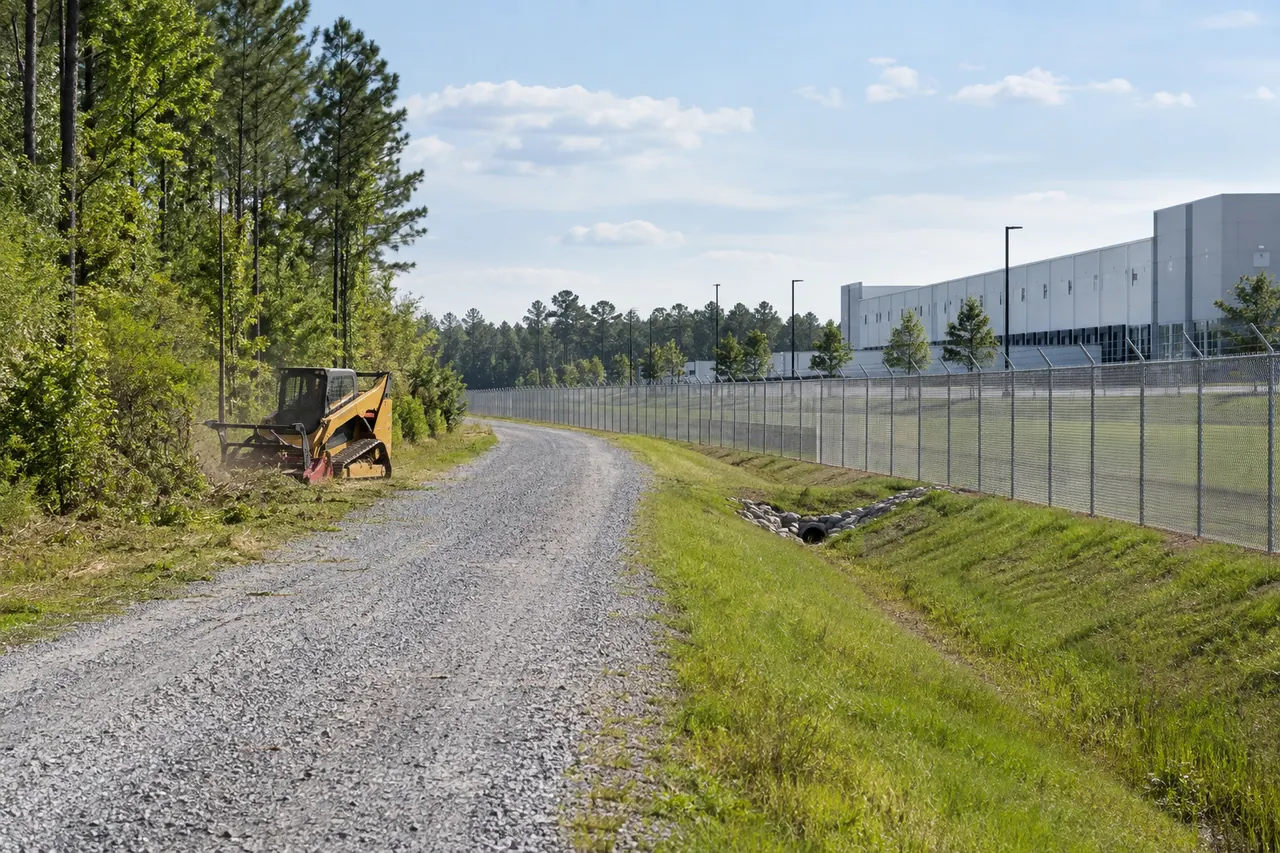
Land Clearing & Forestry Mulching
We clear overgrown lots, perimeter buffers, fence lines and right-of-way on commercial and industrial sites of an acre or more. Then the cleared ground goes on your grounds maintenance schedule, so you don't pay to clear it again.
The site visit and written estimate are free.
- Commercial and industrial sites only
- 1 ac+
- Duke Seiler's years in site work and concrete
- 26 yrs
- Visit schedule and estimate, before we start
- Written
Overgrown Lots and Back Acreage
Every commercial site has a corner nobody has touched in years. Over time it fills in with sweetgum, privet, briars and vines.
We clear it back to ground a mower can maintain. We're not building a pad. The goal is a site that looks kept, where you can see what's on it, and that our crew can keep that way.
Tell us what needs to stay, and we'll mark it before the machine starts. Behind the clearing work is Duke Seiler's 26 years in site development, land clearing, site work and concrete.
The corners nobody has touched
- The outparcel along the road, waiting for a buyer
- The back acreage behind the plant
- The overflow lot and the old laydown area
Perimeter Buffers and Fence Lines
Vines on a security fence pull it down, and brush along it hides the breaks. We clear a working strip along the fence where you have access, and thin perimeter buffers so they stay screens rather than thickets, keeping the trees and plantings your site plan requires.
For data centers and other secure sites, that includes camera sightlines along the fence.
Right-of-Way and Sightline Clearing
Your site's own corridors need to stay open: access roads, rail spurs, drainage easements, pipe and power runs across your property, and the sightlines at your entrances. Your sign should be readable from the road, and drivers pulling out should see the traffic coming.
We cut back brush and limbs to the clearance you need and keep it there with regular mowing. Utility-owned corridors are maintained by the utility, and work inside a state road right-of-way needs NCDOT or SCDOT approval.
Forestry Mulching
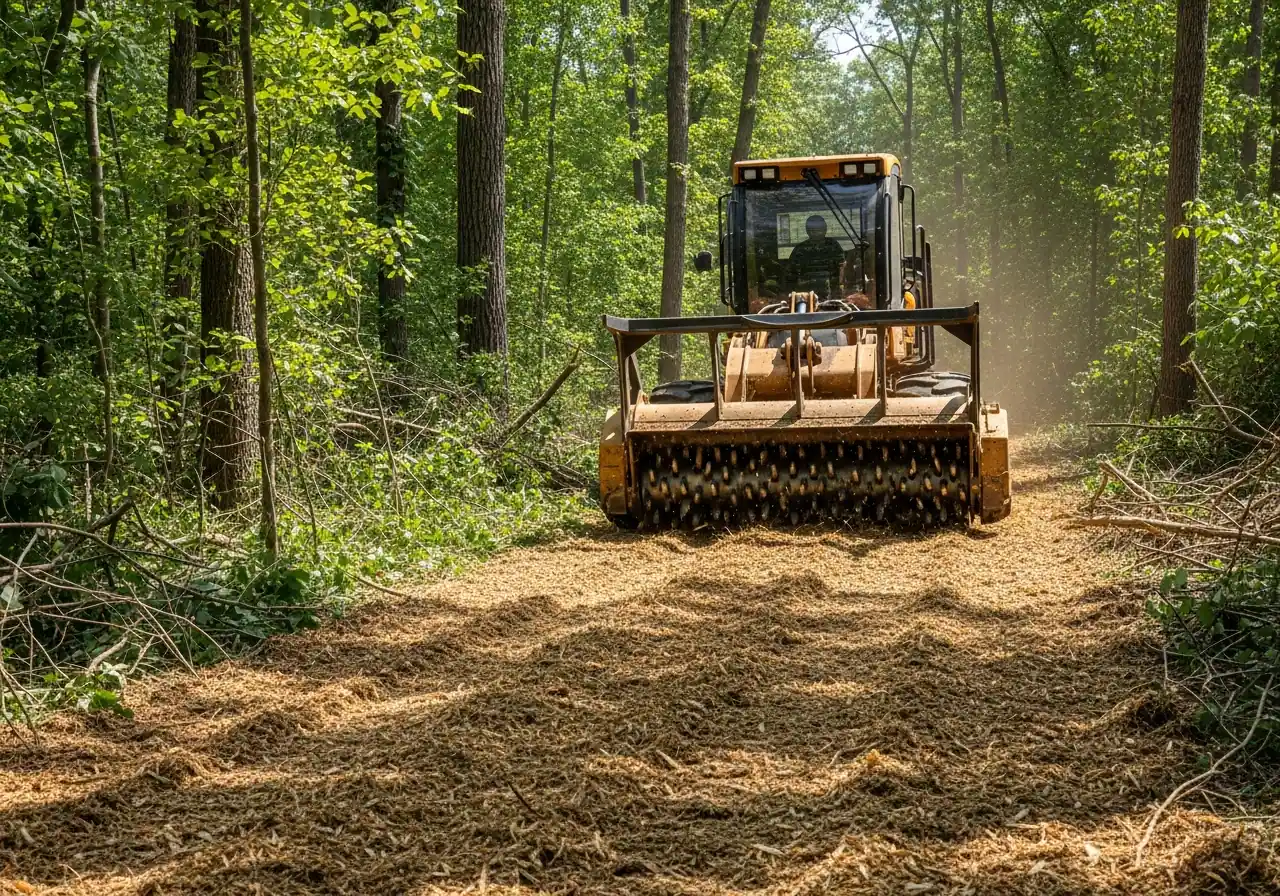
A forestry mulcher grinds trees, brush and stumps into mulch that stays on the ground. It keeps topsoil in place, reduces erosion and avoids the cost of hauling debris off site.
It fits most of the work on this page, where the goal is controlling vegetation, not grading for construction. Where mulch isn't wanted, such as near a pond outlet or on a slope that will be mowed weekly, we clear and remove the material instead.
Selective Clearing
Most sites have trees worth keeping: shade trees at the entrance, a hardwood line along the buffer, specimen trees on the site plan. We walk the site with you, flag what stays and clear around it. Stumps that need to go come out with stump grinding.
Storm Debris
After a storm, the same crew that clears your fence lines clears what the storm dropped: trees across access roads, limbs on fence lines, debris in ditches and pond inlets. We'll work with you on the order that gets your site running again.
Hazard trees near buildings and parking go to our tree services crew.
Agricultural and pasture clearing is also available.
How We Work
- Site walk first. We walk the site with you, flag what stays and note any wet areas, stream buffers or slopes.
- Written estimate. It sets out the area, the method, what stays, what happens to the material and the price.
- What this service covers. Clearing on sites that are already in use. Clearing and grading for new construction is a different job; see grading and site preparation.
- Protected areas. We don't clear inside regulated stream buffers or wetlands, or remove trees your zoning or site plan requires, without sign-off from your engineer or the agency.
- Erosion control. If a job will disturb enough soil to need an erosion and sediment control plan, we'll tell you before we start.
- Insurance. Fully insured, with a certificate of insurance on request.
Land Clearing Questions
How much does commercial land clearing cost?
It depends on acreage, how dense the growth is, the terrain, access and what happens to the material. Forestry mulching avoids hauling costs when the mulch can stay. We'll give you a written estimate after the site walk.
What is forestry mulching, and when is it the better choice?
One machine grinds standing trees, brush and stumps into mulch that stays on the ground. It's the better choice for buffers, fence lines, overgrown lots and right-of-way, where you want the vegetation gone and the soil left in place.
Can you keep a fence line open after the first clearing?
Yes. Once it's cleared, the fence line goes on your visit schedule. A mower or trimmer pass on a regular cycle keeps the vines and saplings from coming back.
Can you clear our buffer without losing the screening?
Usually, yes. We thin the understory and vines, take out dead and leaning trees and keep the trees that do the screening.
What happens to the ground after you clear it?
We can seed it and add it to your grounds maintenance schedule. Regular mowing keeps it from growing back, so you don't pay to clear the same ground twice.
Do you clean up after storms?
Yes. We clear downed trees, limbs and debris from lots, fence lines, access roads and ditches, and we work with you on what gets cleared first.

Cleared ground goes on your grounds schedule.
Regular mowing keeps a cleared fence line, buffer or lot from growing back, on the same visit schedule as the rest of your site.
Often Paired with Land Clearing
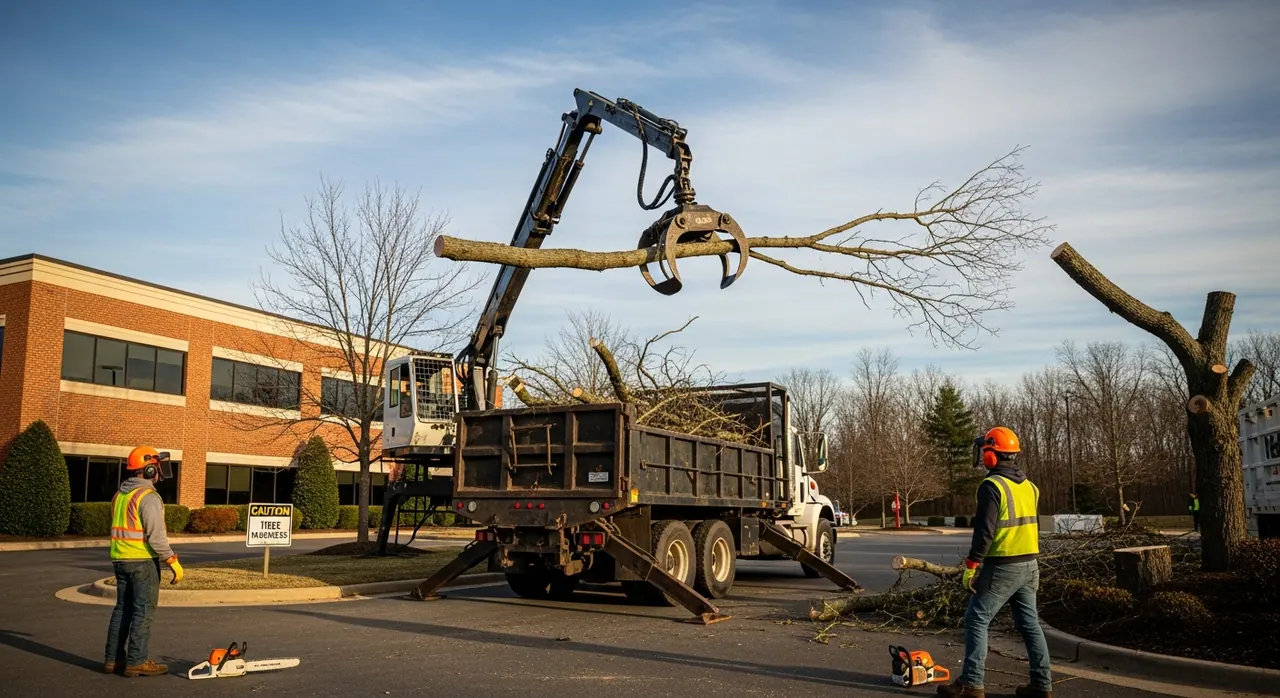 Tree ServicesHazard limbs, storm-downed trees, buffers and sightlines.Learn More →
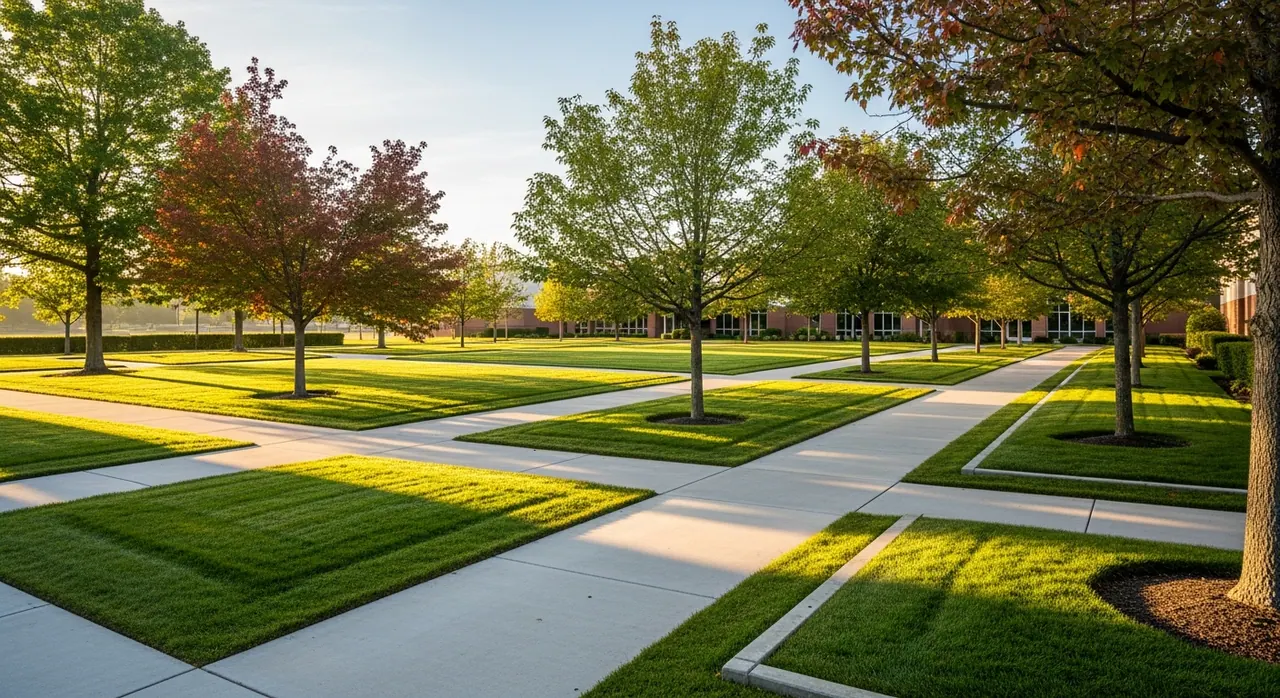 Commercial Landscaping & Grounds MaintenanceMowing, trimming, beds, pruning, turf and open-acreage mowing on a written visit schedule.Learn More →
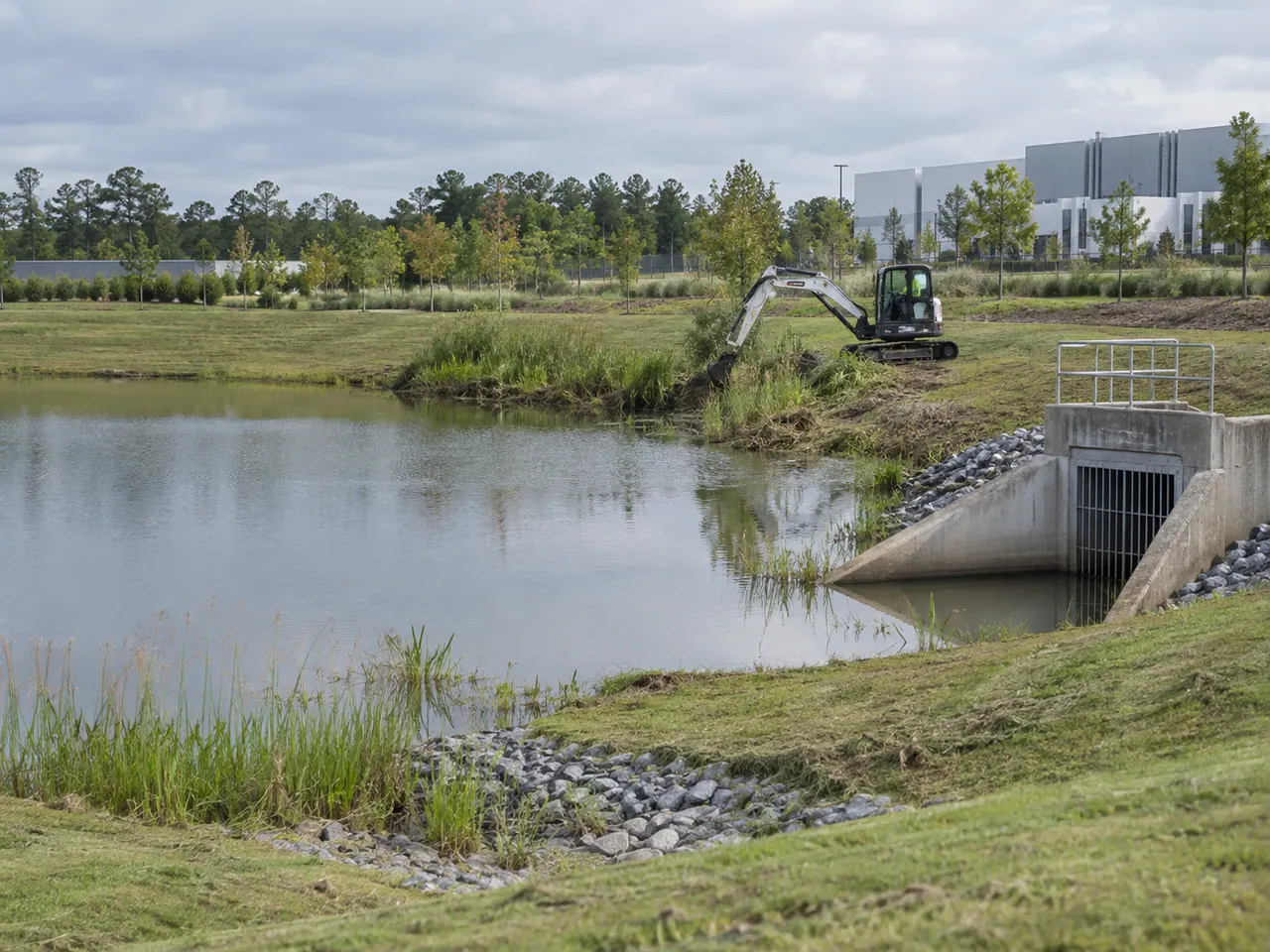 Stormwater Pond MaintenanceBank mowing, outlet and riser clearing and woody-growth removal, working with your engineer.Learn More →
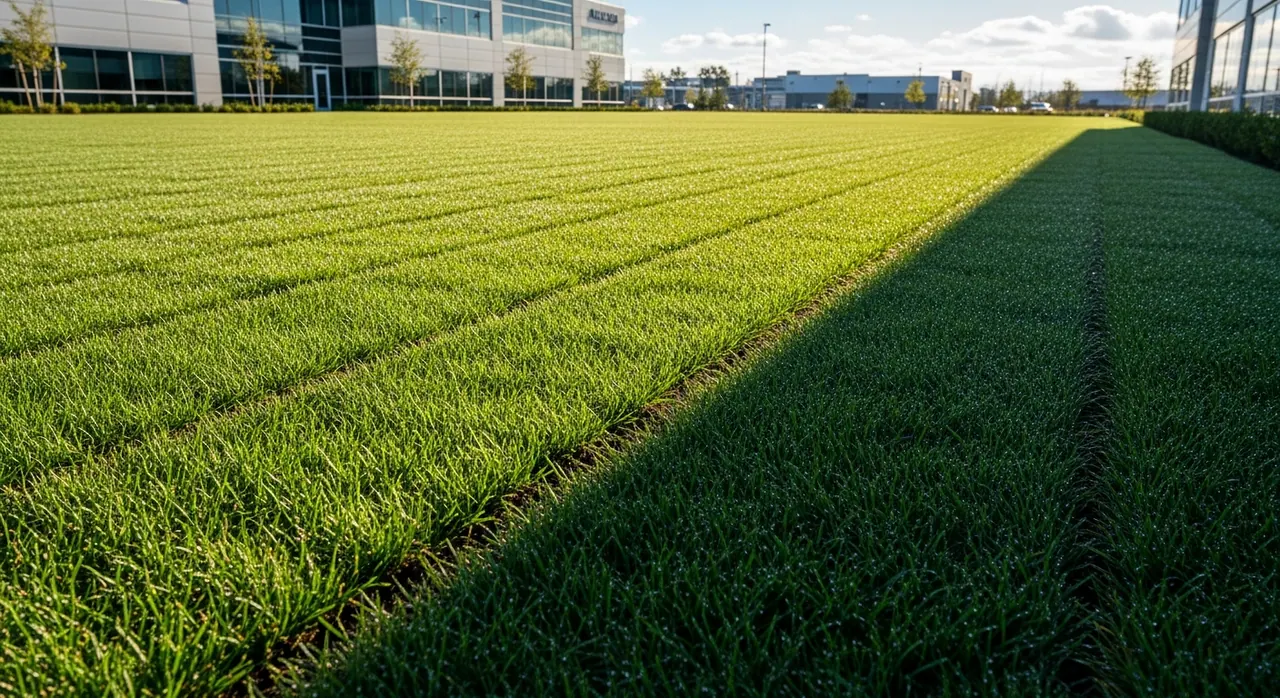 Turf Installation & SeedingSeeding, sod and turf renovation for commercial and industrial sites.Learn More →
Explore More With P1
Services Connected to Land Clearing
Plan what happens before, during, and after vegetation removal.

We clear it. Then we keep it maintained.
Walk the site with us. We'll flag what stays, price the clearing in writing and show you how it fits your grounds visits. The site visit and written estimate are free.